






Claude as the New Operating System for Marketing
The Stack That Got Too Big
There's a chart that haunts every marketing leader who has stared at it long enough. The Marketing Technology Landscape — published annually by Scott Brinker since 2011 — has grown from around 150 logos in its first edition to over 14,000 today. Each square is a tool promising to fix something: attribution, personalisation, content, SEO, analytics, automation, intent, lifecycle, retention.
Most marketing teams use somewhere between 20 and 100 of them. Most aren't properly connected. Most produce data that lives in its own silo. And most of the actual work — the day-to-day grind of running a brand — consists of stitching this Frankenstein together with copy-paste, spreadsheets, Slack threads, and the occasional Zap.
What if all of that was simply the wrong layer of abstraction?
What an Operating System Actually Is
Step back from marketing for a moment. An operating system is not an app. It's not a feature. It's the layer that sits between the hardware and everything else — the thing that manages memory, schedules tasks, mediates between programs, and gives every application a common way to read a file, draw a window, or send a packet.
Before operating systems, every program had to talk to the metal directly. Each application reinvented the wheel for every piece of hardware it touched. The OS abstracted that away. It gave developers a stable surface to build on, and gave users a coherent way to move between programs.
The martech stack has never had this layer. Every tool has been its own island, with its own login, its own dashboard, its own way of "integrating" — usually meaning a brittle automation or a half-finished API.
Claude — and AI assistants of its class — are now becoming exactly that missing layer.
The Protocol Underneath
In late 2024, Anthropic released something called the Model Context Protocol, or MCP. It's an open standard that lets AI models connect to data sources, tools, and services through a consistent interface. Slack, Notion, HubSpot, Webflow, Asana, Google Drive, Shopify, Figma — all of them now have MCP servers. So do thousands of smaller tools.
What MCP does, in practice, is what device drivers did for the early PC: it turns every system into something the OS can talk to. A marketer no longer needs to learn each tool's interface. The interface becomes language. The OS is Claude. The drivers are the connectors.
This is the part most people are missing. The big shift isn't that Claude can write a tweet. It's that Claude can now sit at the top of the entire stack and operate the tools beneath it — read a brief from Notion, pull customer data from a CRM, draft variants in the brand voice, push them into a Webflow CMS, schedule them through a social tool, and report back the results. All through one conversation.
That's not a chatbot. That's an operating system.
What This Changes for the Role
In the OS metaphor, the marketer stops being the person who clicks through the tools and starts being the person who tells the OS what to do. The role moves up the abstraction stack — from operator to architect.
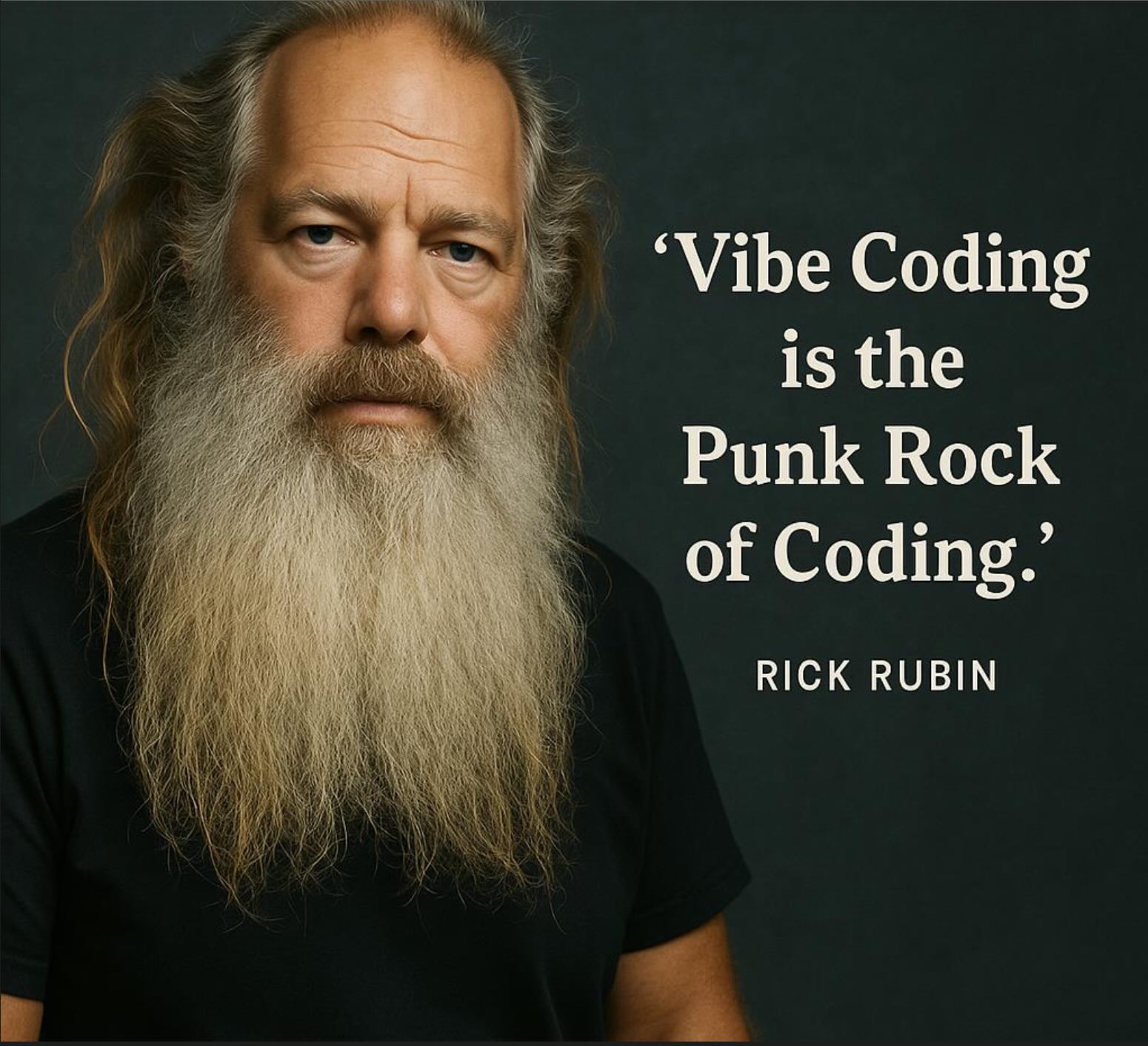
This is exactly the same shift that happened in software engineering with vibe coding. The developer doesn't write every line; they describe what they want and direct the AI to build it. The skill that matters is taste, judgment, and the ability to articulate a clear intention. The execution is delegated.
Marketing is going through the same compression. The skills that suddenly become disproportionately valuable are:
- Brand instinct. Knowing what sounds right, what feels off, what's on-brand and what isn't. An AI can produce ten variants of a headline in seconds. The marketer's job is to pick the one that actually carries the brand.
- Strategic framing. Knowing what question to ask in the first place. Claude will faithfully execute a wrong brief. The bottleneck moves to the quality of the prompt — which is really just the quality of the thinking behind it.
- Systems literacy. Understanding which connectors to wire up, which data to surface, which workflows to automate, and which to keep deliberately human. This is the new marketing operations skillset.
- Editorial judgment. Reading the output critically. AI hallucinates, drifts, smooths the edges off interesting ideas, and occasionally writes something genuinely embarrassing. Someone has to catch that.
What gets devalued, fairly or not, is the layer of work that consisted of moving information between systems. The intern who used to reformat the deck. The agency that used to schedule the posts. The freelancer who used to fix the meta descriptions one at a time. That work is collapsing into a single conversational layer.
The DACH Wrinkle
A note worth making for anyone reading this from a German-speaking context: this shift is happening more slowly here than in the U.S. — for good reasons and bad ones.
The good reasons are around data protection, brand discipline, and a healthy scepticism toward Silicon Valley hype cycles. The bad reasons are around tool fragmentation, conservative procurement, and a tendency to confuse "we have a process" with "we have a strategy."
The opportunity for DACH marketers is the same as for everyone else, just arriving on a slight delay. The teams that build their AI operating layer now — properly, with attention to brand, data governance, and human judgment — will run circles around the ones still adding the forty-seventh tool to their stack next year.
How to Actually Start
The trap with any new operating system is treating it like another app. The value doesn't come from using Claude to write the occasional caption. It comes from re-architecting the workflow.
A reasonable starting point looks like this. Pick one repeated marketing motion — the weekly content cycle, the monthly newsletter, or the quarterly campaign rollout. Map it end to end: where does the input come from, where does the output go, which tools touch it, where does the friction actually live? Then ask which of those steps could be handled by a model with the right context and the right connectors.
Most teams discover that the answer is "most of them" — and that the work that remains is the work that always mattered: the strategy, the taste, the judgment, the relationships.
The Older Pattern Underneath
There's a deeper pattern here worth naming. Every time a new layer of abstraction appears in technology, the same thing happens: the busywork moves down into the machine, and what's left for humans is the part that requires presence, taste, and care.
The printing press didn't end writing. It ended copyists. The spreadsheet didn't end finance. It ended manual ledgers. The browser didn't end communication. It ended postage. Each time, the people who clung to the lower layer lost. The people who moved up — who learned to wield the new abstraction — flourished.
Claude is that next layer for knowledge work, and marketing is one of the first disciplines to feel it fully. The question for anyone in this field isn't whether to adopt it. The question is how quickly to climb up the stack and start operating from the place where humans were always supposed to be working: vision, intention, and the kind of judgment that no system, however intelligent, can substitute for.
The operating system is here. The next move belongs to the operator.